
Does Professional Carpet Cleaning Get Rid of Dog Urine?
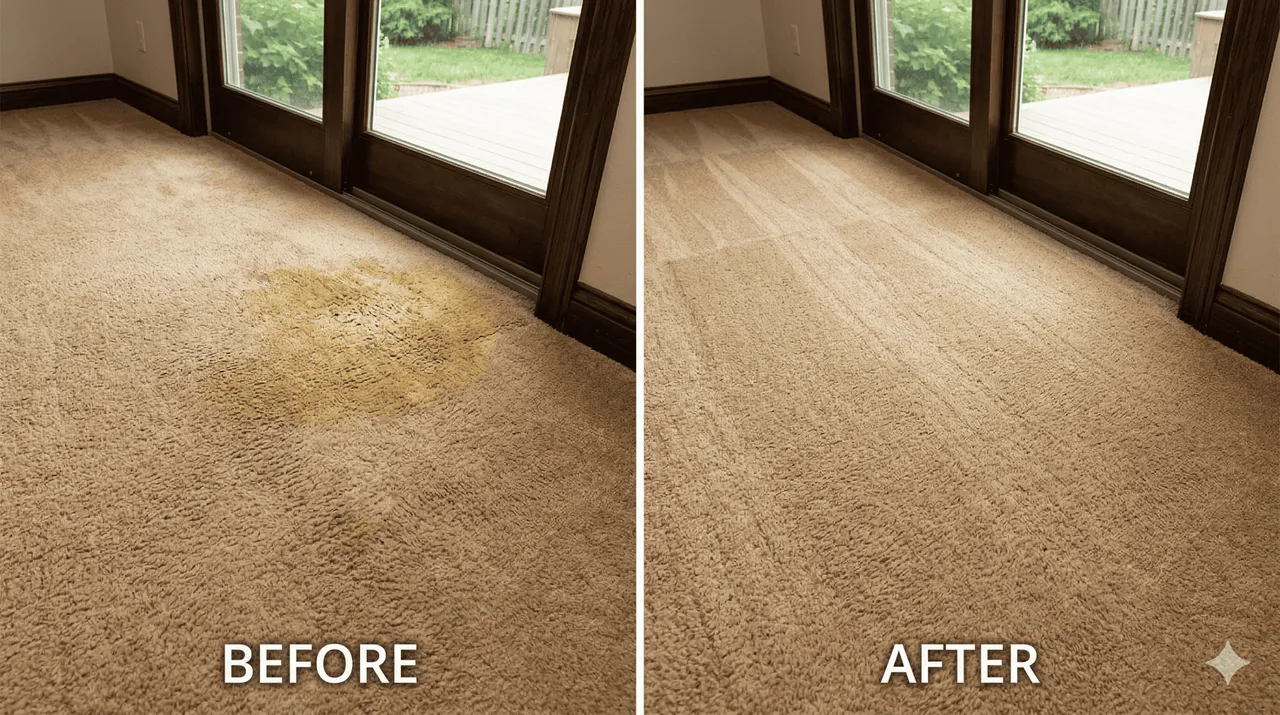
Yes — professional carpet cleaning can get rid of dog urine completely, but only when the visit includes a dedicated pet urine treatment. A standard professional cleaning on its own — even a thorough one — will lift the visible stain and knock the smell down for a few days. Then the first humid afternoon arrives and the odor is back, as strong as ever. That's not bad luck and it's not a bad cleaner; it's chemistry. Here's exactly what a standard cleaning does and doesn't remove, why dog urine odor survives it, and what the process that actually works looks like.
Cleaning Alone: No. Cleaning Plus a Pet Urine Treatment: Yes.
"Professional carpet cleaning" usually means hot water extraction: heated cleaning solution is driven into the carpet and immediately vacuumed back out, taking dirt, dander, and the water-soluble part of stains with it. For everyday soil, it's exactly the right tool — and it's why a freshly cleaned carpet with a urine spot looks and smells great on the day of the cleaning.
The problem is what hot water alone can't touch. Dog urine leaves behind a residue that doesn't dissolve in water, and most of it isn't even in the part of the carpet a standard cleaning reaches. So when a company runs a regular cleaning over a urine spot and the smell returns a week later, you didn't get scammed — the wrong tool was used for the job. Removing dog urine is a separate, targeted treatment that happens alongside the cleaning, and any honest carpet cleaner should tell you that before the truck ever leaves the shop.
Where Dog Urine Actually Goes (It's Deeper Than You Think)
When a dog has an accident, the carpet face — the fibers you can see and touch — holds only a fraction of it. Gravity takes the rest down: through the fiber, through the woven backing, and into the padding underneath. Larger dogs and repeat accidents can soak all the way to the subfloor.
And urine doesn't travel straight down — it spreads outward as it sinks. The spot at the padding level is usually much larger than the stain you can see on the surface. Picture an upside-down cone: small at the top where you're scrubbing, wide at the bottom where nobody's chemistry has ever reached. That's why a spot can look perfectly clean up top while the room still smells like a kennel — the source of the odor is living a half-inch below everything you've cleaned.
Why the Smell Comes Back After a Regular Cleaning
Dog urine is a mix of two very different materials:
- Water-soluble components — urea, pigment, salts. These rinse away with ordinary cleaning, which is why the spot fades and the smell improves at first.
- Uric acid crystals — the part that causes the lingering odor. Uric acid is not soluble in water. The crystals bond to carpet fibers, backing, and padding, and no amount of water or general-purpose detergent will dissolve them.
Those crystals can sit odorless for weeks — until humidity rises. A muggy day, a hot shower, a steamy kitchen: moisture in the air reactivates the crystals and they release odor all over again. The smell never actually left; the cleaning removed the soluble layer around the crystals and left the crystals themselves behind. (We covered this chemistry in depth in our cat urine article — dog urine works the same way, with one small mercy: it's usually less concentrated than cat urine, so it's often the more treatable of the two.)
There's a second culprit, too: wicking. As a cleaned carpet dries, moisture left in the deeper layers travels back up the fibers — carrying dissolved urine residue from the pad with it. That's the maddening pattern where a spot looks gone for a day or two and then reappears in the exact same place.
Why Rental Machines and Store Sprays Usually Make It Worse
Most homeowners try the DIY route before calling anyone, and with dog urine it tends to backfire in predictable ways:
- Rental machines push water in but can't pull it back out. Their vacuum power is a fraction of a truck-mounted unit's, so they over-wet the carpet — driving dissolved urine deeper into the padding and leaving the carpet damp for days. You end up with a bigger contaminated area than you started with.
- Store-bought enzyme sprays can help on a fresh, surface-level accident — but they only work where they can reach. A spray bottle wets the top of the carpet; the urine is in the pad. Set-in odor stays put.
- Ammonia-based cleaners are the worst option. Urine breaks down into ammonia, so an ammonia-cleaned spot smells like a fresh marking post to your dog — and invites a repeat visit to the same spot.
For what to do in the first minutes after an accident — which genuinely does limit the damage — see our quick guide: what to do when your dog has an accident in the house.
What a Real Pet Urine Treatment Looks Like
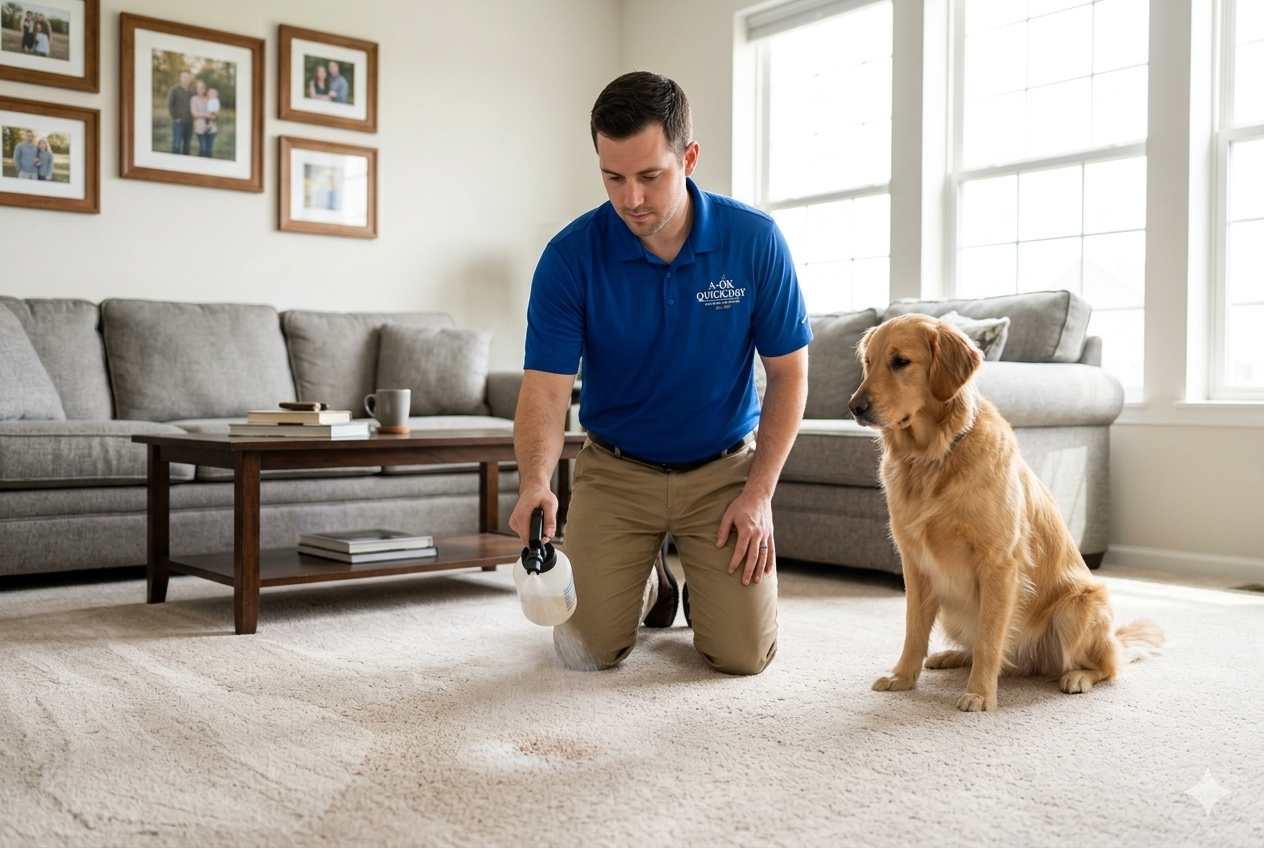
Getting rid of dog urine for good means treating the full depth of the contamination, not the surface. A proper Pet Urine Treatment follows a specific sequence:
- Find every spot with a UV blacklight. Dried urine glows under UV light, revealing the true size of each spot and the accidents you never knew about. You can't treat what you can't find — and the blacklight almost always finds more than the homeowner expects.
- Apply the treatment down to the padding. The solution has to reach every layer the urine reached — fiber, backing, and pad — not get misted across the top.
- Agitate so the treatment makes contact with the contamination throughout the spot.
- Let it dwell. The chemistry needs time to break down the uric acid crystals. Rushing this step is one of the main reasons cheap treatments fail.
- Extract with truck-mounted hot water extraction. The broken-down residue is flushed and pulled out of the carpet — along with the dirt and dander — using vacuum power strong enough to recover the moisture from the deeper layers instead of leaving it behind.
One honest detail worth knowing: with an oxygen-based treatment like ours, the odor fades over the 24–48 hours after the visit rather than vanishing the moment the technician walks out. The chemistry adds oxygen that breaks the odor molecules apart so they off-gas out of the carpet. If you notice the smell changing during that window, that's the process working — by day two, it's gone. A treatment that "works" instantly is usually a fragrance covering the smell, and fragrances wear off.
Can Every Carpet Be Saved? The Honest Answer
Most can — but not all. When a spot has been hit repeatedly for months, urine can saturate the padding and soak into the subfloor. At that point, treating the carpet alone won't hold: the odor bleeds back up from underneath. Severe cases sometimes call for replacing a section of padding and sealing the subfloor before the carpet goes back down.
That's also why nobody can honestly quote a pet urine job sight-unseen over the phone. The visible stain tells you almost nothing about what's underneath — the blacklight inspection is what reveals the real scope. It's the difference between a quote based on evidence and a guess that changes once the work starts.
How A OK Quick-Dry Gets Rid of Dog Urine — For Good
At A OK Quick-Dry, pet urine removal isn't a side service — we handle roughly 500 pet odor jobs every year, about ten a week, for families across McHenry, Lake, Kane, DuPage, and northern Cook counties. Every job starts with a free UV blacklight inspection so you get an honest assessment of what's really in the carpet before anyone talks price. If the carpet can be saved, we treat it at depth and extract from below the surface so the odor doesn't return. If it can't, we'll tell you that too — before you spend a dollar.
Our solutions are green-certified and safe for your dogs and your kids, and our truck-mounted extraction means carpets are typically dry in hours, not days. Everything is backed by our 100% odor removal guarantee: once the carpet has fully dried, if you can still smell urine, we come back and retreat it at no charge. After nearly four decades of doing this — we've been at it since 1987 — we can say it plainly: yes, professional carpet cleaning gets rid of dog urine. It just has to be the right kind.
More Carpet Cleaning Tips
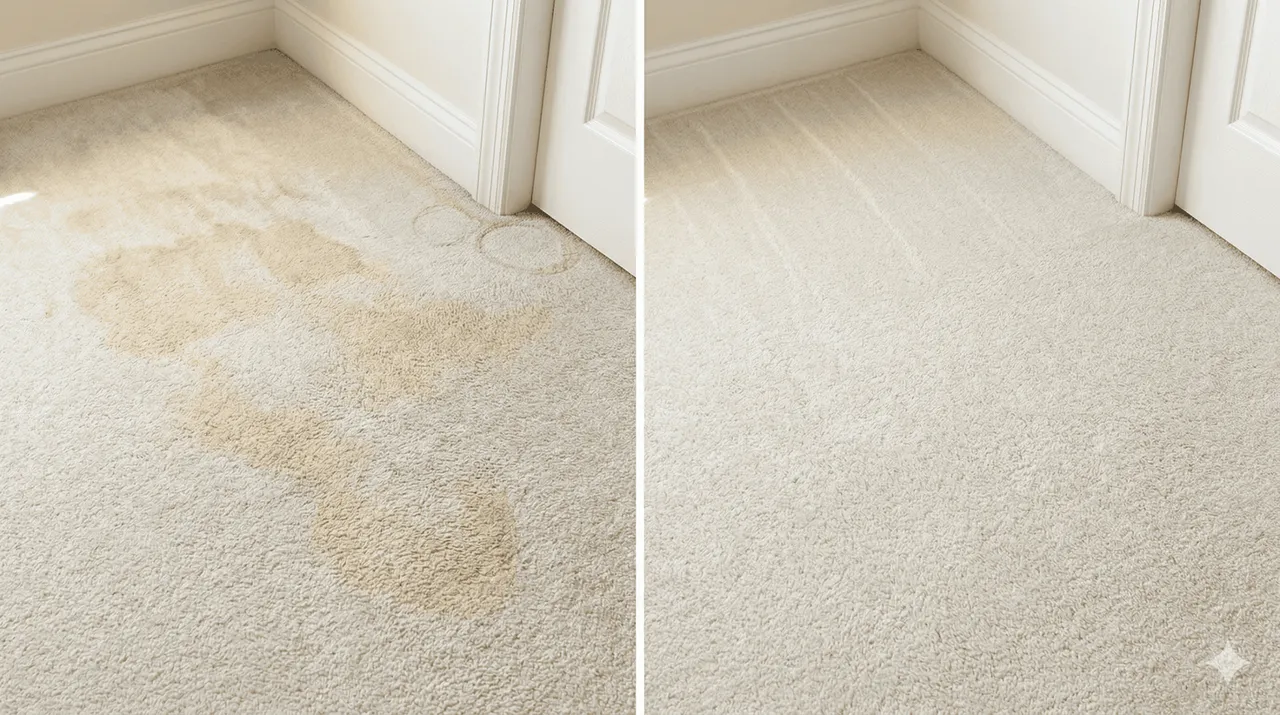 Pet Urine & OdorWill Carpet Cleaning Get Rid of Cat Urine?Regular cleaning makes the spot look better for a few days — then the smell comes back. Here's the chemistry behind why, and the process that actually eliminates cat urine for good.Read article →
- Pet Urine & Odor7 Facts About Pet Urine in Your Carpet (You Need to Know)Seven things every pet owner should know about how urine damages carpet — and what it really takes to remove the odor at the source.Read article →
- Pet Urine & OdorWhat to Do When Your Dog Has an Accident in the HousePotty-training a puppy or living with an older dog? Here's exactly what to do the moment your dog has an accident on the carpet.Read article →