
Will Carpet Cleaning Get Rid of Cat Urine?
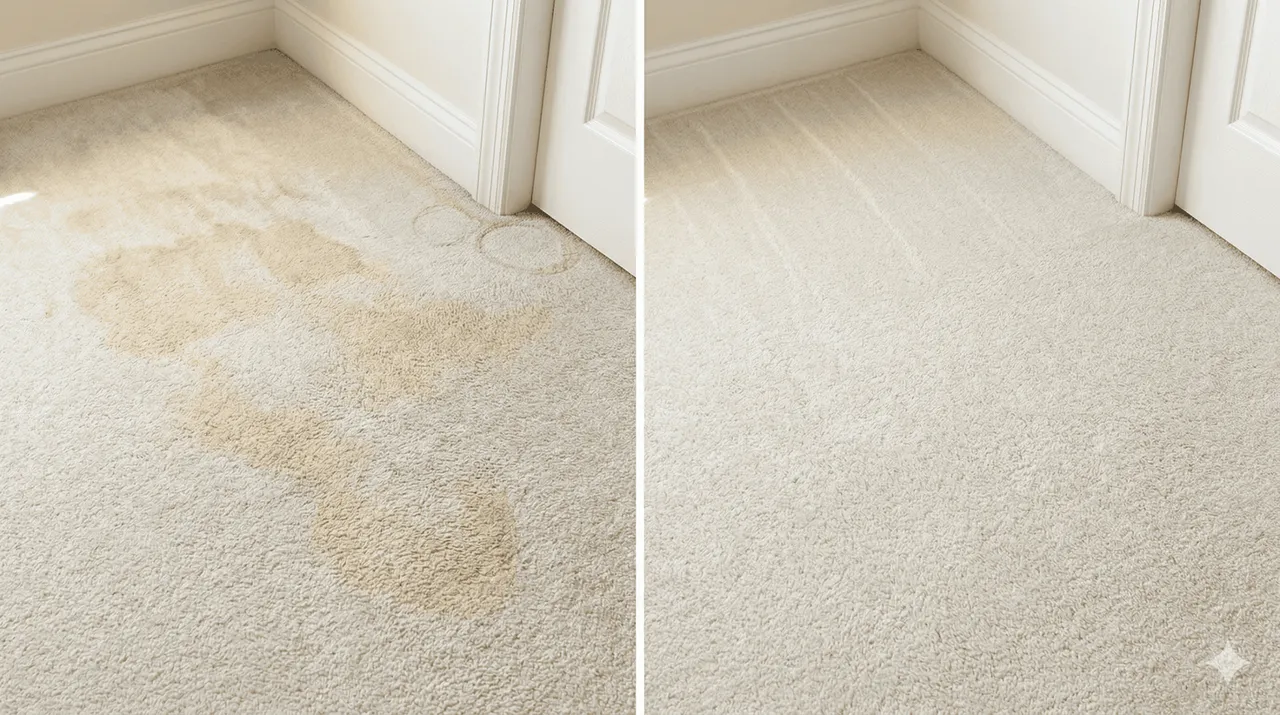
Short answer: no — not a regular carpet cleaning on its own. A standard cleaning will make the spot look better and smell better for a few days. But it does not remove the part of cat urine that actually causes the lingering odor, so within a week or two — usually the first humid or rainy day — the smell is right back. Getting rid of cat urine for good takes a specific pet-urine treatment, not a standard carpet cleaning. Here's exactly why, and what actually works.
Why Cat Urine Is Harder to Remove Than Almost Anything Else
Cat urine is in a category of its own. It's more concentrated and more pungent than dog urine, and the reason is partly biology: cats descend from desert animals, so their kidneys are built to conserve water and produce highly concentrated urine. Add a high-protein diet and the fact that most cats simply don't drink much water, and you get an extremely concentrated waste product.
It also contains a compound that's unique to cats: felinine, a sulfur-based amino acid. Fresh cat urine barely smells — but as it sits, bacteria break the felinine down into volatile sulfur compounds (the same chemical family that makes skunk spray so powerful). At the same time, the urea in the urine breaks down into ammonia, which is that sharp, eye-watering note you smell when you walk into a room with an old accident. This is the key insight most people miss: cat urine doesn't fade with time — it gets worse.
The Real Culprit: Uric Acid Crystals
Here's the part that explains everything. Cat urine is a mixture of two very different kinds of material:
- Water-soluble components — urea, the yellow pigment that stains, salts, and bacteria. These dissolve in water, so ordinary cleaning does rinse them away. That's why the stain fades and the smell improves at first.
- Uric acid crystals — and these are the problem. Uric acid is not soluble in water. It bonds tightly to whatever it touches — carpet fibers, the backing, the padding underneath, even the subfloor — and plain water and detergent simply cannot dissolve it.
Those crystals can lie dormant and odorless for a long time. But the moment humidity rises — a muggy summer day, a hot shower, mopping nearby, running a humidifier — the crystals reactivate and release that unmistakable cat-urine smell all over again. That is why the odor "comes back." It never actually left. The cleaning removed the soluble layer around the crystals, but the crystals themselves stayed locked in your carpet.
Why Regular Carpet Cleaning Alone Can't Get It Out
A standard carpet cleaning — including hot-water extraction, often called steam cleaning — is designed to lift soil and the water-soluble part of a stain off the surface and upper fibers. With cat urine, that leaves three problems unsolved:
- It can't dissolve the crystals. No amount of water or general-purpose detergent breaks down insoluble uric acid. The crystals are still there when the carpet dries.
- It can't reach deep enough. When a cat has an accident, only a small fraction stays in the carpet face you can see — the majority soaks down into the backing, the pad, and the subfloor. A surface cleaning never touches that layer, which is exactly where most of the odor lives.
- Cleaning before treating can make it worse. Hot water applied to an untreated spot can actually bond the proteins in urine more tightly to the carpet fibers, setting the odor in instead of removing it — which is why the spot has to be treated before any cleaning happens.
There's even a name for the "I cleaned it and it looked gone, then it reappeared" effect: wicking. As the carpet dries, residue from the deeper layers travels back up to the surface — so the spot and the smell return a day or two later, right after you thought you'd won.
Why DIY Home Remedies Don't Fix It Either
The internet is full of vinegar, baking soda, and hydrogen peroxide recipes. They're not useless — but they don't solve the real problem:
- Vinegar and baking soda can neutralize odor temporarily on a fresh, surface-level accident. They do not break down the uric acid crystals, so set-in odor returns with the next humid day.
- Ammonia-based cleaners are the worst choice of all. Ammonia is one of the compounds in cat urine — so to your cat, a spot cleaned with ammonia smells like a fresh marker telling them this is the bathroom. It actively encourages them to pee there again.
- What's actually needed is enzyme or oxidizing chemistry that chemically breaks the uric acid bond — and the ability to get that chemistry down to every layer the urine reached. That's not something a spray bottle and a rag can do.
Why Your Cat Keeps Going Back to the Same Spot
This is the frustrating cycle every cat owner knows. Cats have a far more sensitive sense of smell than we do — they can detect trace urine residue long after a spot smells "clean" to you. As long as any of that residue remains, the spot still reads as a marked bathroom to your cat, and they keep returning to it. You can't break the behavior until the odor source is truly, completely gone — which is one more reason a quick surface clean tends to make the problem drag on for months.
What Actually Removes Cat Urine — The Process That Works
Eliminating cat urine for good means doing the opposite of a surface clean. A real pet-urine treatment follows a specific sequence:
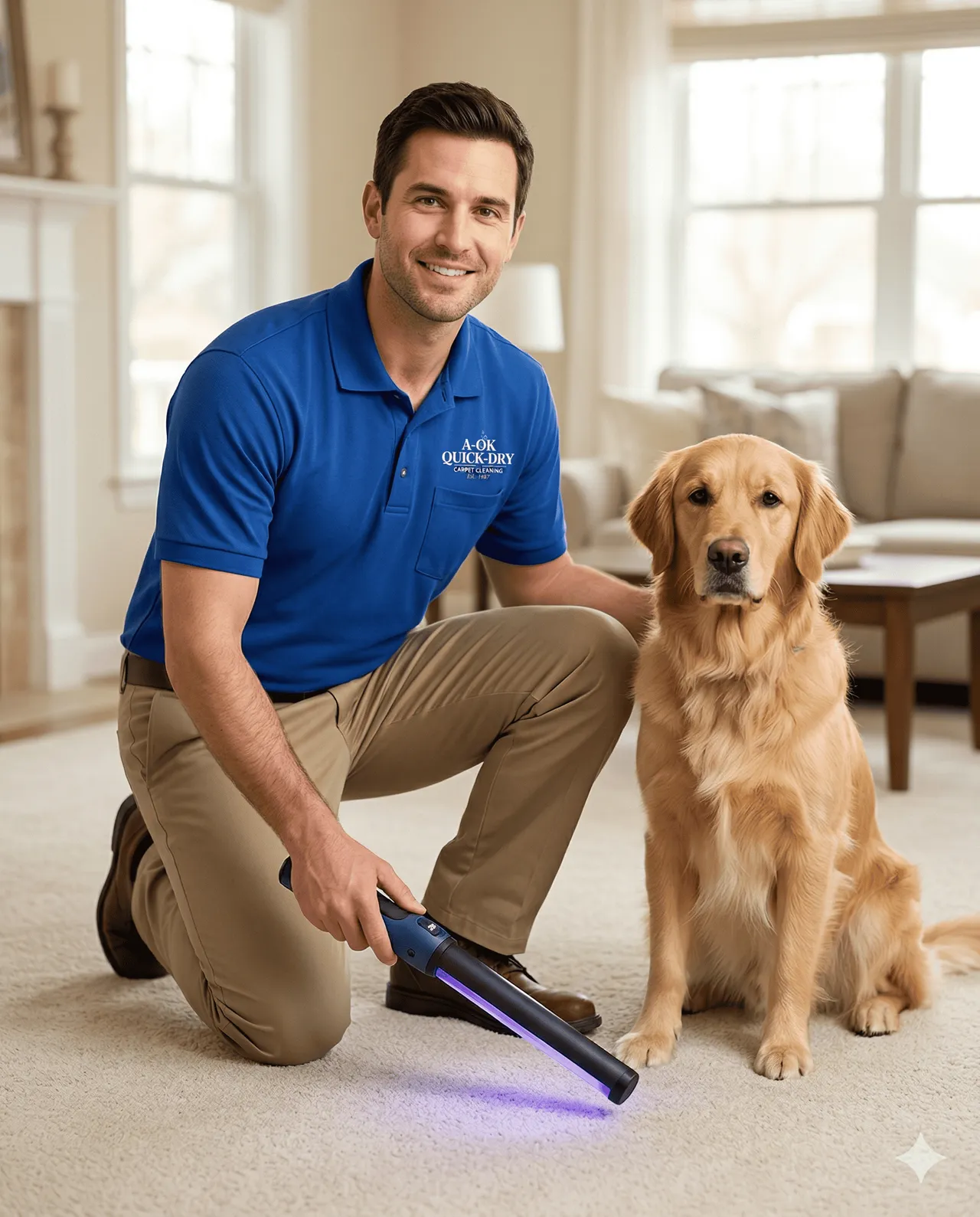
- Find all of it with a UV blacklight. Old urine glows under UV light, revealing hidden saturation you'd never spot in daylight — including spots far bigger than the visible stain. You can't treat what you can't find.
- Treat the full depth, not just the surface. Because most of the urine is in the pad and subfloor, the treatment has to be driven down into those layers — not wiped across the top.
- Break the crystals with the right chemistry. Enzyme-based and oxidizing treatments chemically break uric acid down into substances that simply evaporate or rinse away — destroying the odor at its source instead of covering it.
- Give it dwell time. That chemistry needs time to digest the crystals. Rushing this step is why so many treatments fail.
- Flush and extract from below the surface. The dissolved contaminants are flushed through and pulled out of the deeper layers, not just blotted off the top.
- For severe cases, seal or replace. When urine has saturated the subfloor, the pad may need replacing and the subfloor sealed before new carpet goes down — otherwise the odor bleeds straight back through.
This is a fundamentally different job than carpet cleaning — which is why it's a separate, specialized pet-urine removal service, not a step you can bolt onto a standard cleaning.
How A-OK Quick-Dry Removes Cat Urine — Completely
At A-OK Quick-Dry, our pet urine removal service is built around exactly this process. Every job starts with a free UV inspection so we can see the full extent of the problem and give you an honest assessment — not a guess over the phone. If the carpet can be saved, we treat it at depth, break down the uric acid crystals at the source, and extract from below the surface so the odor doesn't return. If a case is severe enough that treatment won't hold, we'll tell you the truth instead of selling you something that won't work.
Our solutions are plant-derived and safe for your pets and kids, and thanks to our powerful powerful vacuum extraction, your carpets are usually dry in hours — not days. We've been doing this for families across McHenry, Kane, Lake, DuPage, and northern Cook counties since 1987 — all backed by our 100% odor-removal guarantee: if you can still smell urine after the carpet has fully dried, we come back and retreat it at no charge. The smell is gone, or you don't pay.
More Carpet Cleaning Tips
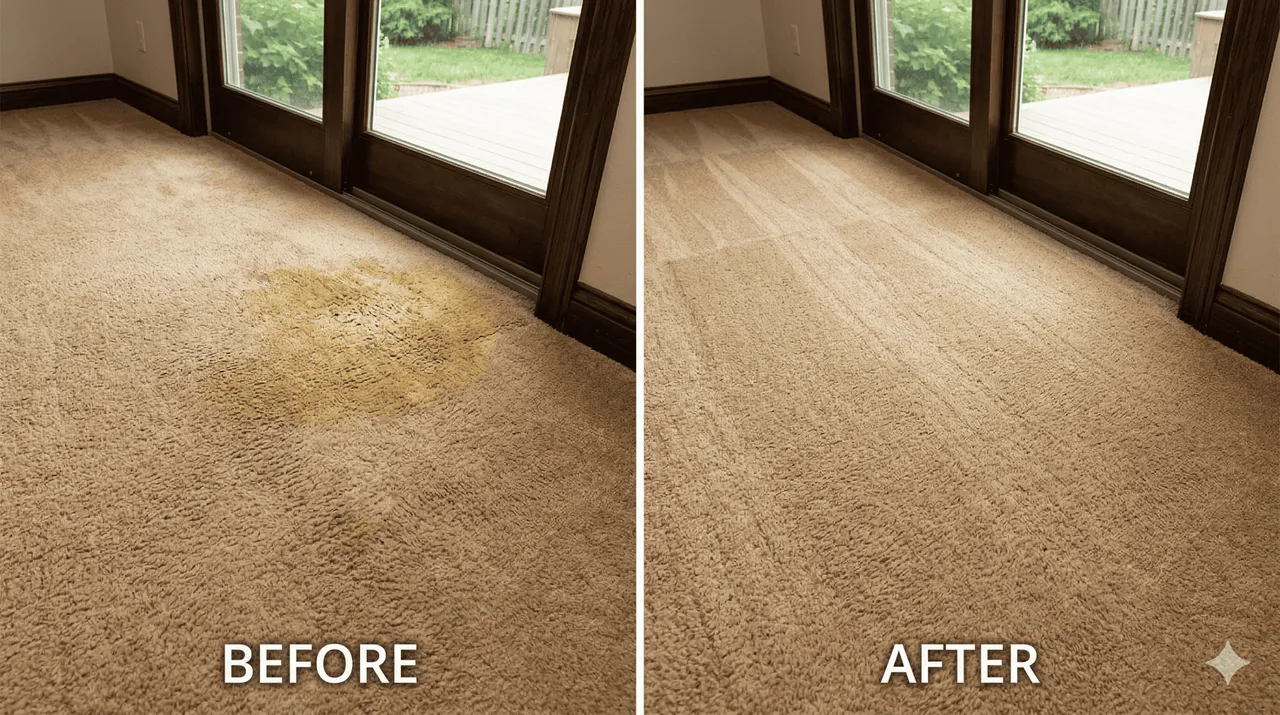 Pet Urine & OdorDoes Professional Carpet Cleaning Get Rid of Dog Urine?Yes — but only when the visit includes a real pet urine treatment. Here's why a standard cleaning can't kill the odor, where dog urine actually goes, and the deep-treatment process that removes it for good.Read article →
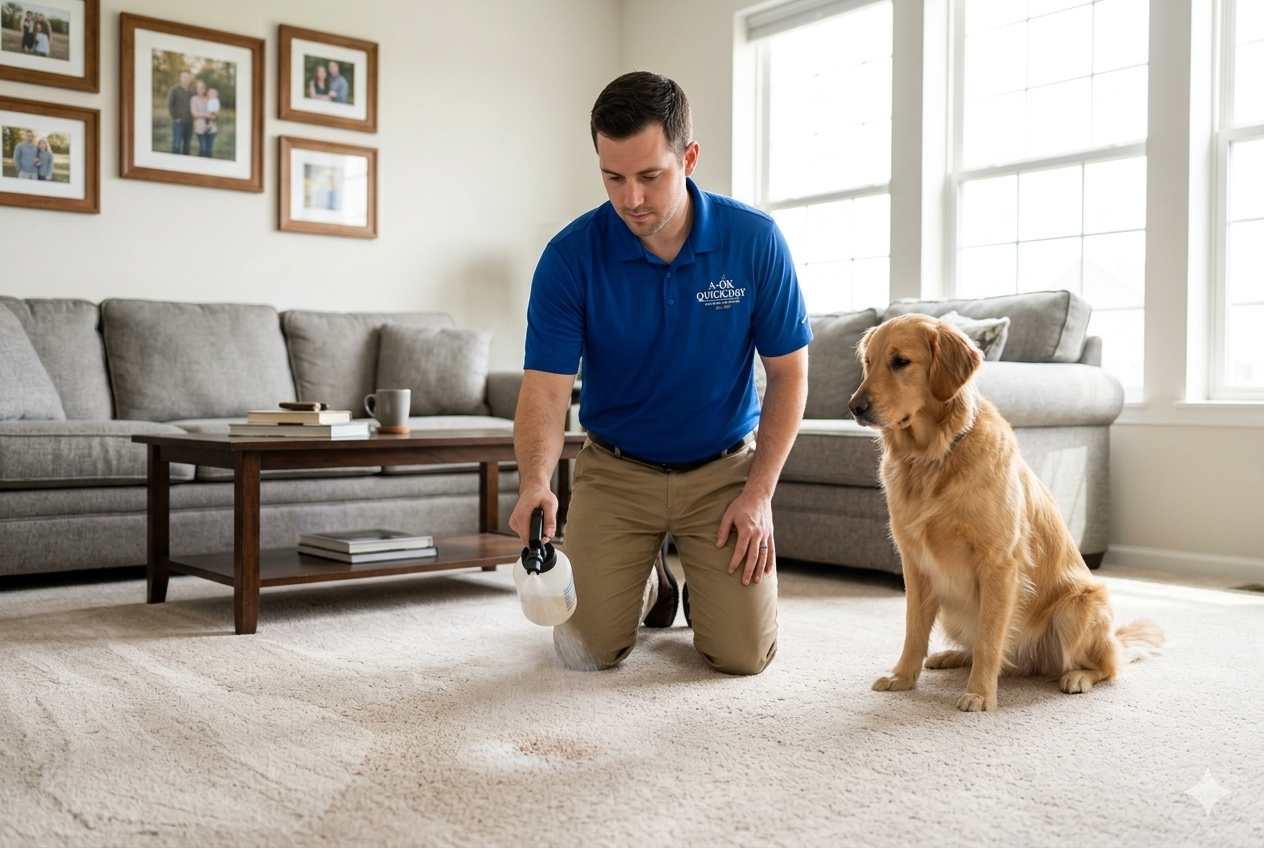 Pet Urine & Odor7 Facts About Pet Urine in Your Carpet (You Need to Know)Seven things every pet owner should know about how urine damages carpet — and what it really takes to remove the odor at the source.Read article →
- Pet Urine & OdorWhat to Do When Your Dog Has an Accident in the HousePotty-training a puppy or living with an older dog? Here's exactly what to do the moment your dog has an accident on the carpet.Read article →