
Burst & Frozen Pipe Water Damage Cleanup — Northern Illinois
A burst pipe is an emergency. Water pours into walls, ceilings, and floors until someone shuts it off — and the damage starts the moment it starts flowing. We answer 24/7, arrive fast, and have the equipment to extract water and dry structure throughout McHenry, Lake, Kane, DuPage, and northern Cook County.
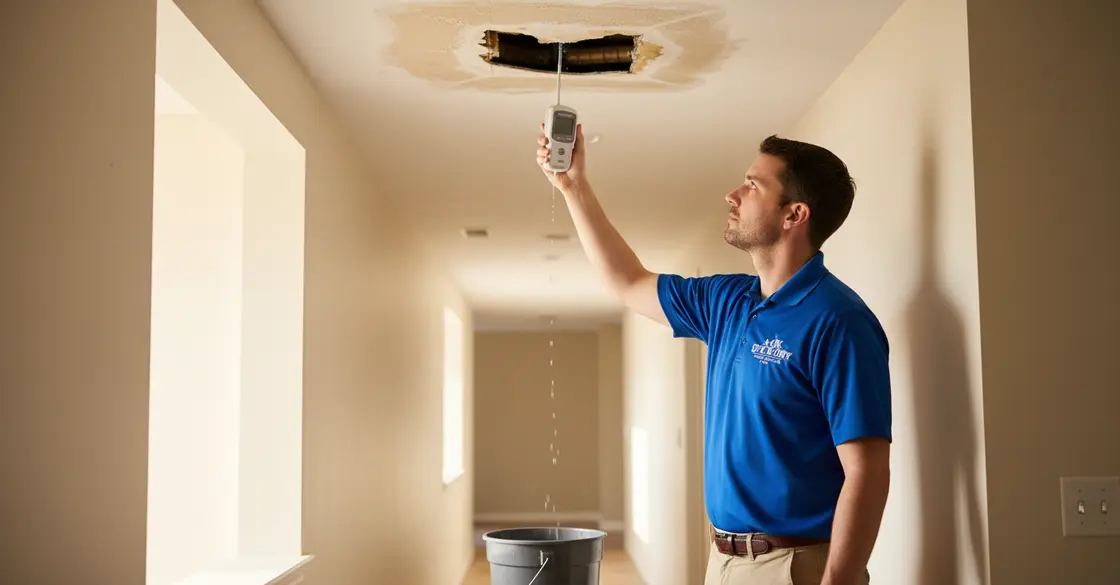
Where Burst Pipe Water Goes
Water from a burst pipe doesn’t stay where the pipe is. It follows gravity and finds every crack, seam, and gap in your home’s structure. Here is what we look for and address.
Ceiling & Drywall Saturation
When a pipe in the ceiling or an upper floor bursts, water saturates drywall and insulation before it ever reaches the floor. Saturated drywall can hold gallons. We extract from above as well as below, and assess whether drywall needs to be opened to dry or replaced.
Subfloor & Floor Damage
Water migrates to the lowest point. Even a second-floor pipe burst will find its way into the subfloor, through seams, and down into the structure below. Subfloor saturation that isn't dried properly leads to rot and structural issues within weeks.
Wall Cavity Moisture
Pipes run inside walls. When they burst, insulation and wall cavities absorb water invisibly. Moisture meters and thermal imaging let us map the full extent of saturation without tearing out every wall — though some opening may be necessary for drying access.
Hardwood Floor Buckling
Hardwood floors absorb water and buckle within hours. Whether they can be saved depends on how quickly water is extracted and drying begins. We've seen floors bounce back with fast intervention — and we've seen floors that looked saveable turn into replacements because the call came too late.
Carpet & Padding
Ground-floor carpet and padding absorb large volumes of water quickly. Padding almost always needs replacement. The carpet itself may be salvageable with fast extraction and drying if the water source was clean (Category 1).
Burst Pipe Cleanup — Step by Step
From stopping the water to final moisture verification and insurance documentation.
Stop the Water Source
The first priority is stopping active water flow. Shut off the main water valve or the isolation valve serving the burst pipe. We'll walk you through this on the phone if you're not sure where your shutoffs are located.
Full Damage Assessment
We inspect all affected areas with moisture meters and document what we find. Burst pipe damage often travels farther than the visible wet spot — we check ceilings, walls, floors, and the spaces below before scoping the work.
Extraction from All Surfaces
Powerful extraction removes water from carpet, hardwood, and subfloor. For ceiling or wall damage, we may use specialty tools to extract moisture from within cavities. Thorough extraction now reduces drying time significantly.
Structural Drying Setup
Commercial dehumidifiers and directional air movers are placed throughout the affected area based on our moisture map. For multi-floor damage, we set equipment on each level. We monitor moisture readings daily and adjust until targets are met.
Mold Prevention Treatment
All affected surfaces receive antimicrobial treatment within the first 24 hours. The 72-hour window is real — mold can begin in that timeframe under the right conditions. Fast treatment after extraction gives us the best chance of preventing it entirely.
Documentation for Insurance
Burst pipe damage from sudden events is typically covered by homeowner's insurance. We photograph all damage, document water categories, record daily moisture readings, and provide a complete written scope — exactly what your adjuster needs to process the claim.
Frozen Pipe Prevention for Illinois Winters
Northern Illinois winters are serious. We average weeks of temperatures below 10°F and regular polar vortex events that push well below zero. Frozen pipes are preventable — here is what actually works.
The Illinois Winter Risk Window
Pipes freeze most often during sustained cold snaps — when temps stay below 20°F for more than 12–18 hours. Vulnerable spots are pipes against exterior walls, pipes in unheated crawl spaces or garages, and supply lines to hose bibs. The pipes in McHenry and Lake County homes that face northwest (the direction most Arctic air arrives from) are especially at risk.
Burst & Frozen Pipe Damage — FAQ
How do I know if a pipe is frozen before it bursts?
Signs of a frozen pipe: no water from a faucet, visible frost on an exposed pipe, unusual sounds when you run water, or a faucet that produces only a trickle. If you suspect a frozen pipe, shut off the main water valve immediately — when it thaws, you want to control the flow. Do not use open flame to thaw. A heat gun or hair dryer on the lowest setting, applied carefully, can work on accessible pipes. For pipes inside walls or ceilings, call a plumber.
My ceiling is wet and bulging — what do I do?
A bulging or sagging ceiling is holding water and will likely collapse on its own. If it's safe to do so, place a bucket under the lowest point and carefully puncture the ceiling with a screwdriver to let the water drain in a controlled way — a controlled drip is better than a collapse. Then call us immediately. Document with photos before you drain it. Do not stand directly under a bulging ceiling.
Does homeowner's insurance cover burst pipe damage?
Yes — burst pipes from sudden, accidental events are one of the most commonly covered water damage claims. Standard homeowner's policies typically cover the resulting water damage (extraction, drying, content damage) though not the pipe repair itself. The key is documenting the event: photos of the damage, documentation of when it occurred, and a professional restoration scope. We provide all of this. Gradual leaks from deferred maintenance are a different story — those are typically not covered.
Can ceiling water damage cause mold?
Yes. Saturated insulation and drywall above a ceiling hold moisture for a long time. If not dried properly, that moisture becomes a mold environment within 24–72 hours depending on temperature and humidity. Ceiling water damage is particularly prone to hidden mold because the moisture sits in insulation, above your line of sight, and can persist even after the visible ceiling appears dry. Proper moisture readings — not just visual inspection — are the only way to confirm it's dry.
What's the 72-hour mold window and is it real?
Yes, it's a real guideline from restoration science. Under warm, humid conditions with organic material present (drywall, wood, carpet), mold spores can begin colonizing in 24–48 hours and become visible growth within 72 hours. This doesn't mean mold will always appear — it means the conditions that allow mold exist within that window. Fast extraction and drying, combined with antimicrobial treatment, are the most effective prevention. Cold, dry conditions slow the window down. A warm summer pipe burst is more urgent than a winter one for this reason.