
Mold Prevention & Remediation After Water Damage — Northern Illinois
The best mold remediation is mold that never grows. Fast water extraction, immediate antimicrobial treatment, and complete structural drying — done within the critical 72-hour window — prevents mold in the vast majority of water damage cases. That’s our primary service. For early-stage mold that has already developed, we also provide limited remediation and honest referrals when the scope exceeds what we handle.
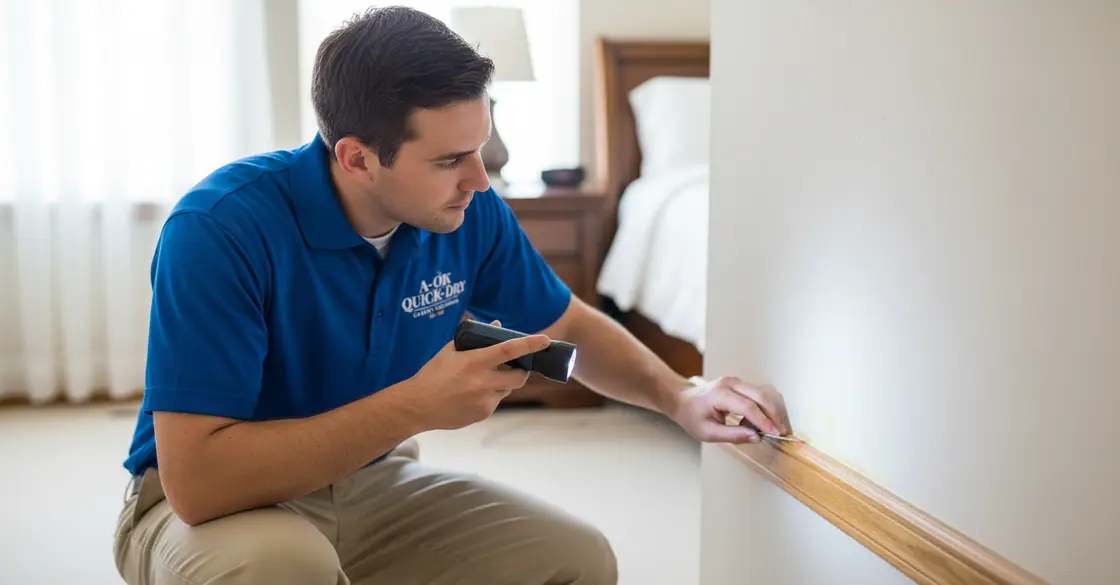
How We Prevent Mold After Water Damage
Mold prevention is about removing the conditions mold requires: moisture, organic material, and time. We address the first and last within hours of your call.
Fast Water Extraction
The single most effective mold prevention step is getting water out of your home as quickly as possible. Our powerful extraction removes standing water within hours of your call — before it has time to saturate materials deeply enough to sustain mold growth.
Immediate Antimicrobial Treatment
Within the first 24 hours of extraction, all affected surfaces receive professional-grade antimicrobial treatment. This disrupts mold spore conditions before growth can begin. Applied to walls, floors, framing, and any porous surfaces that contacted water.
Commercial Structural Drying
Antimicrobial treatment alone is not sufficient — the underlying moisture must be removed. Commercial dehumidifiers and air movers run continuously until moisture readings on all structural materials reach safe levels. Mold cannot sustain growth in properly dried conditions.
Daily Monitoring Through Dry-Down
We monitor moisture readings daily throughout the drying process. Pockets of residual moisture in walls or subfloor are the most common source of mold problems after water damage — they're invisible during cleanup and only show up later. Daily readings catch them.
Our Honest Scope
We’re a carpet cleaning company with strong water damage extraction and drying capabilities. Here is a straight answer about what we do, what we handle on a limited basis, and when we refer you elsewhere.
Mold Prevention (Our Primary Offer)
The best mold remediation is mold that never grows. Fast extraction, antimicrobial treatment, and complete structural drying — executed within the critical 24–72 hour window after water damage — prevents mold in the overwhelming majority of cases. This is what we do, and we're good at it.
Early-Stage Mold Treatment
If mold growth has begun on hard surfaces — drywall, wood trim, subfloor — we can apply professional-grade biocide treatments and remove affected material where necessary. Early-stage means limited in scope and recent in origin. We assess honestly whether a situation is early-stage or beyond our scope.
When to Call a Mold Specialist
Extensive mold growth — more than a few square feet, inside wall cavities, in HVAC systems, or recurring despite treatment — is beyond what we handle. We refer trusted specialists in the northern Illinois area for these situations. We'll tell you clearly when you're in that territory.
Early Signs of Mold After Water Damage
Call us if you notice any of these after a water event — especially if more than 48 hours have passed since the damage occurred.
Mold After Water Damage — FAQ
How long does it take for mold to grow after water damage?
Under favorable conditions — warm temperatures, high humidity, and organic material present — mold spores can begin colonizing in 24–48 hours. Visible growth typically appears within 72 hours. These are the conditions that exist in a water-damaged home during Illinois summers. Winter losses are somewhat slower due to lower temperatures, but mold can still develop, especially if the home is heated. The 24-hour response window is real.
Can you prevent mold if I call you within 24 hours?
In most cases, yes. Fast extraction and antimicrobial treatment within the first 24 hours, followed by proper structural drying, prevents mold growth in the vast majority of water damage events. The earlier we get there, the better the outcome. We've handled thousands of jobs in northern Illinois and can give you an honest assessment of mold risk based on what we find when we arrive.
What are the health risks of mold after water damage?
Common mold species that grow after water damage can cause respiratory irritation, nasal symptoms, eye and skin irritation, and aggravate asthma and allergies. Individuals with compromised immune systems, respiratory conditions, or mold sensitivities are at higher risk. Most mold that grows after residential water damage is not the toxic black mold (Stachybotrys) that gets significant media coverage — but any mold growth in a home should be addressed.
I found mold weeks after a water event. Can you help?
It depends on the extent and location. If growth is limited — a patch on a wall surface, some discoloration on drywall — we can assess and treat. If mold is inside wall cavities, in ductwork, or widespread across multiple surfaces, you need a certified mold remediation contractor. We'll be upfront about which situation you're in when we assess it. We'd rather refer you to someone equipped to handle it than take on a job outside our scope.
Do I need air quality testing after water damage?
Air quality testing is generally warranted when you have visible mold growth, persistent symptoms after cleanup, or when a remediation contractor needs to verify clearance after a large-scale mold job. For water damage where no visible mold has developed and the drying was done correctly, testing is usually not necessary. If you're uncertain, a certified industrial hygienist can do an independent assessment — separate from any remediation company, including us.
Prevention Starts With Fast Water Response
Mold prevention is the outcome of good water damage response. These are the services that make the difference.